

Leaving care without leaving relationships behind: what the September 2026 reforms mean for residential and supported-accommodation providers
From 30 September 2026, local authorities in England must comply with strengthened requirements governing their published offer to care-experienced young people.
Although these reforms form part of the legal framework commonly associated with the Children (Leaving Care) Act 2000, the immediate changes are introduced principally through the Children’s Wellbeing and Schools Act 2026. This amends the Children and Social Work Act 2017 and operates alongside the continuing leaving-care duties in the Children Act 1989 (Department for Education, 2026a; UK Parliament, 2026).
For children’s homes and supported-accommodation providers, this distinction does matter. The new statutory guidance is addressed principally to local authorities; it does not automatically transfer councils’ statutory responsibilities to private, charitable or independent providers.
I’ve no doubt providers will nevertheless feel its effects through:
- care and pathway planning;
- home expectations;
- commissioning and contract specifications;
- joint work with housing and leaving-care services;
- information-sharing;
- transition and post-placement support arrangements; and
- Ofsted’s increasing focus on relationships, belonging and the experiences of young people after they leave.
At the centre of the reforms is the proposition that leaving care should not mean leaving behind the people, places and relationships that make a young person feel secure.
What changes on 30 September 2026?
By 30 September 2026, every local authority in England must have reviewed and updated its published care-leaver local offer. You can find more information on the current offers here: https://mycovenant.org.uk/about-the-care-leaver-covenant/
The revised offer must explain not only which services exist, but the authority’s arrangements for supporting care-experienced young people with:
- their transition to adulthood;
- safe, stable and suitable accommodation;
- financial support and financial literacy;
- access to services;
- participation in society; and
- building and maintaining enduring relationships.
Authorities must publish information about how they anticipate accommodation needs before and after a young person leaves care, work with housing services and providers, prevent homelessness, support young people leaving custody and assist former relevant children under 25 to access the services they need (Department for Education, 2026a).
The guidance also promotes a more relational understanding of adulthood. The objective is no longer adequately described as teaching a young person to “live independently”. Councils are expected to support interdependent living, enabling young people to develop practical adult capabilities while belonging to dependable networks of people and community support.
The revised local-offer guidance should therefore be understood as more than a requirement to improve a council webpage. The published offer is intended to describe and make publicly visible the tangible substance of the support available.
Enduring relationships: the new golden thread
The government describes enduring relationships as important, consistent and lasting relationships that provide emotional security, warmth, responsiveness, dependability and shared positive experiences (Department for Education, 2026b).
Crucially, these relationships are defined by the child or young person. They might include relatives and siblings, but also:
- friends;
- former foster carers;
- residential or support workers;
- teachers and education professionals;
- neighbours;
- mentors;
- youth workers; and
- members of cultural, community or faith groups.
The government’s Enduring Relationships strategy says that building and sustaining loving relationships should become the “golden thread” running through the care system. It explicitly tells providers (including children’s homes and supported accommodation) that supporting these relationships is not an optional extra (Department for Education, 2026b).
This presents a significant challenge for services whose operating models have traditionally emphasised professional boundaries and independence targets. Appropriate boundaries remain essential, but a model in which an important relationship ends abruptly on the day a young person moves on will increasingly be difficult to defend.
The question for providers is changing from ‘has the young person completed an independence-skills programme?’ to ‘who will still answer when this young person needs help six months after leaving, and what have we done to make those relationships safe and sustainable?’
The Children’s Commissioner’s hierarchy of needs
The Children’s Commissioner’s Care Experienced Advisory Board has developed a hierarchy of needs to help professionals understand what care-experienced young people feel they need to participate, belong and fulfil their potential (Children’s Commissioner for England, 2026a).
Its foundations include:
- food, warmth and secure accommodation;
- physical, emotional and financial safety;
- dependable adults and appropriate family contact;
- access to health and mental-health support;
- information about entitlements;
- involvement in pathway and safety planning; and
- continuity during moves into or away from a local area.
Above these foundations sit integration, belonging, self-esteem, autonomy, knowledge, identity and the opportunity to fulfil personal aspirations.
This might provide a useful test when preparing a young person for greater independence; they may be able to cook a meal, complete a budget worksheet or attend an appointment, while also still needing to have or develop:
- a safe person to contact;
- emotional security;
- a sense of belonging;
- confidence about their rights;
- stable accommodation during holidays;
- help during a financial emergency; or
- relationships that will survive their time with you.
Practical competence should therefore not be confused with readiness to manage alone.
What will this mean for children’s homes?
Children’s homes are already expected to prepare children for their futures, plan any moves carefully and help them form and sustain attachments with safe adults.
The April 2026 children’s homes inspection framework (SCCIF: https://www.gov.uk/government/publications/social-care-common-inspection-framework-sccif-childrens-homes) gives greater prominence to:
- the quality of relationships;
- children’s sense of belonging and stability;
- timely preparation for their next move;
- the experiences of children who recently left;
- support to make and sustain attachments with adults; and
- whether managers challenge ineffective responses from other services (Ofsted, 2026a).
The September reforms strengthen the context in which these expectations will be judged. Homes should expect commissioners and inspectors to look beyond completed paperwork and consider what changed for the child.
Before a young person leaves, a home should be able to demonstrate that:
- transition planning began early and did not wait until the disruption meetings;
- the young person’s important relationships were identified in their own words;
- decisions about future contact were based on individual welfare and safeguarding considerations rather than blanket policies;
- higher education, further education and apprenticeship aspirations were actively supported;
- the proposed accommodation was assessed in the context of safety, transport, education, employment and existing relationships;
- practical preparation included budgeting, benefits, tenancy responsibilities, digital access, cooking, health and help-seeking;
- the young person knew their entitlements and how to contact their personal adviser (and had the time and opportunity to develop a relationship and attachment with them);
- term-time and holiday accommodation needs had been addressed where the young person intended to study; and
- there was a realistic plan for what would happen if the move began to break down.
Providers should also be prepared to challenge the placing authority when a move is premature, poorly matched or likely to sever important relationships. Recording that challenge, and the authority’s response, may become increasingly important evidence of effective leadership. Independent advocacy can also be key at these twists and turns in the road (see NYAS website for more info on the provider in your area: https://www.nyas.net/get-support/young-people/advocacy-search/).
What will this mean for supported accommodation?
Registered supported accommodation for looked-after children and care leavers aged 16 and 17 is governed by its own quality standards. These already require providers to support young people towards adult life in a safe, homely and nurturing environment. Building strong and meaningful relationships is an established theme of the supported-accommodation regulations and accompanying guidance (Department for Education, 2023).
The revised local offer is likely to sharpen commissioning expectations in several areas:
- early identification of move-on needs;
- evidence that accommodation is suitable for the individual young person;
- stronger coordination with housing and leaving-care teams;
- practical support during the early stages of a tenancy;
- rapid escalation where accommodation is at risk;
- continuity of mental-health and adult-service support;
- opportunities to build peer and community networks;
- preparation for education or employment away from the local area; and
- clarity about what contact or support will continue when the regulated place in your home ends.
Supported-accommodation providers should not allow ‘independence’ to become a justification for withdrawing support too quickly. A young person may be able to budget, cook and attend appointments while still being profoundly isolated or without anyone dependable to call.
Good preparation should assess relational readiness as well as practical competence.
Higher education: a transition that providers must start preparing for early
The Children’s Commissioner’s updated August 2026 handbook, Supporting care experienced students, was co-produced with the Care Experienced Advisory Board. It contains 33 recommendations spanning pre-admission, moving in, accommodation, finance, wellbeing, social integration, employment, graduation and postgraduate study (Children’s Commissioner for England, 2026b).
Although the handbook is directed principally at higher-education professionals and is not statutory guidance, it is directly relevant to children’s homes, supported-accommodation providers, leaving-care teams and personal advisers. It identifies several areas that should be addressed well before a young person leaves their home with you.
Information and aspiration
Providers should ensure that young people know higher education is a realistic option and understand:
- the range of available institutions and courses;
- contextual admissions;
- application and clearing processes;
- bursaries, scholarships and hardship funds;
- accommodation and guarantor arrangements;
- support for disabled and neurodivergent students; and
- the named care-experienced-student contact at prospective institutions.
The absence of family experience of university means professionals should not assume that young people will independently discover their entitlements.
Accommodation throughout the year
The Commissioner recommends year-round accommodation with priority access and flexible contracts for care-experienced students. This is particularly important because university accommodation may not ordinarily cover every vacation, while returning to a family home may not be possible.
Pathway and accommodation planning should therefore establish:
- whether accommodation is available for 365 days;
- where the young person will live during each term-time break;
- who will meet deposits and advance rent;
- whether a rent guarantor is required and who will provide it;
- what will happen if the course or accommodation ends unexpectedly;
- whether the local authority’s support continues when the student studies out of area; and
- what accommodation will be available after graduation.
A university place should not be treated as a substitute for a complete housing plan.
A person as well as a place
The handbook recommends a primary point of contact, regular wellbeing checks, peer mentoring, social-integration support and a person to meet the student when they arrive. This closely mirrors the enduring-relationships agenda. A successful transition cannot be secured merely by handing over the keys to student accommodation. Before the move, the provider should help the young person identify:
- their university or college contact;
- their personal adviser;
- trusted former carers or workers;
- relevant health and mental-health services;
- peer and care-experienced-student networks;
- emergency and out-of-hours contacts; and
- the person who will notice and respond if the young person becomes isolated or disengages.
Financial security
The handbook recommends clear information about bursaries, scholarships, hardship funding, travel, course materials, budgeting and local employment. The revised local-offer guidance also requires authorities to explain:
- the statutory £2,000 higher-education bursary;
- support with accommodation during and outside term time;
- local rent-guarantor schemes;
- discretionary financial support;
- support for postgraduate study; and
- what assistance may continue where study extends beyond the young person’s 25th birthday (Department for Education, 2026a).
Providers should ensure that this information is incorporated into the young person’s pathway planning and translated into actual applications, deadlines and named responsibilities.
Avoiding another cliff edge at graduation
One of the handbook’s most significant recommendations is that institutions should provide opportunities for students to stay in touch and maintain a legacy after completing their studies.
This recognises that a care-experienced young person may encounter several successive cliff edges:
- leaving the children’s home or supported accommodation;
- moving away to study;
- losing statutory support or reaching 25;
- leaving university accommodation; and
- graduating without a family home or financial safety net.
Enduring-relationship planning should therefore extend beyond entry to higher education. It should consider what happens when the course finishes, including accommodation, employment, postgraduate study, community connections and continuing relationships.
An important eligibility distinction
The Children’s Commissioner’s handbook uses an intentionally broad definition of “care experienced”. It can include people who have experienced foster care, residential care, formal or informal kinship care, youth-justice settings, adoption following care and estrangement (Children’s Commissioner for England, 2026b).
This is broader than the legal categories used to determine entitlement to statutory leaving-care support under the Children Act 1989.
Providers and higher-education institutions should therefore distinguish between:
- statutory entitlements that depend on a young person meeting a legal definition such as eligible, relevant or former relevant child; and
- wider discretionary support that an institution, council or partner may make available to anyone with experience of care.
A young person who falls outside the statutory leaving-care categories should not automatically be assumed to have no need for relational, financial or educational support.
Do providers have responsibilities after a young person leaves care?
The primary statutory leaving-care duties remain with the responsible local authority. These include personal-adviser and pathway-planning responsibilities, accommodation assistance and, depending on the young person’s legal status and circumstances, duties extending to age 25.
A former provider does not automatically acquire a free-standing statutory duty to support every young person after departure. Its continuing responsibilities will depend on matters including:
- the terms of the contract or placement plan agreements;
- the young person’s care and pathway plans;
- any commissioned transition or outreach service;
- safeguarding and information-sharing responsibilities;
- commitments in its statement of purpose or young person’s guide; and
- any Staying Close arrangement.
We should nevertheless avoid treating this legal distinction as permission for an abrupt relational cut-off. Where a young person wants a relationship with a former member of staff to continue, the provider, young person and local authority should discuss how that can happen safely, consistently and transparently.
An agreed arrangement might include:
- scheduled telephone or video contact;
- visits;
- recognition of birthdays, results, graduation and other important occasions;
- practical support during a tenancy crisis;
- access to appropriate social events;
- mentoring; or
- continuing contact with a trusted former key worker.
The arrangement should identify:
- what support will be provided;
- by whom and for how long;
- how the young person’s consent will be obtained and reviewed;
- which organisation supervises and funds the work;
- permitted communication methods;
- boundaries and out-of-hours expectations;
- safeguarding and escalation arrangements;
- record-keeping and information-sharing requirements;
- insurance and lone-working considerations; and
- how the arrangement may change or end.
Continuing contact should not depend solely on the unpaid goodwill of an individual employee. Informal, unsupported arrangements can create risks for the young person, worker and organisation: ‘enduring’ does not have to mean unstructured.
Staying Close: important, but not yet a universal September 2026 duty
Staying Close is designed to provide young people leaving residential care with suitable move-on accommodation and continuing practical and emotional support from someone they know and trust.
It is particularly relevant to children’s homes because it seeks to provide a residential equivalent to the gradual transition available through Staying Put in foster care. Existing models include accommodation near a former home, support from former residential staff and opportunities to maintain familiar relationships (Department for Education, 2022).
However, we need to be precise about the timetable. The September 2026 guidance says that Staying Close will become a national local authority duty in 2028/29 and will be rolled out nationally in advance. It does not become a universal statutory entitlement on 30th September 2026.
Where Staying Close is already available, the council should include it in its local offer and explain how it can be accessed.
Providers should therefore think about asking each placing authority:
- Is Staying Close operating locally?
- Which young people can be considered?
- When should assessment and planning begin?
- Can independent providers participate?
- What accommodation and support models will be commissioned?
- How will former residential staff time be funded?
- Who remains responsible for safeguarding, supervision and review?
- What happens when the young person studies out of area?
- How will support during university vacations be managed?
- What evidence will demonstrate that the arrangement is helping?
The Children’s Wellbeing and Schools Act provides for a future council duty to assess whether Staying Close support is required in the interests of a former relevant child’s welfare and, where it is required, to provide appropriate support. Its purposes include helping the young person find and keep suitable accommodation and access services relating to wellbeing, relationships, education, employment and participation (UK Parliament, 2026).
The duty remains the local authority’s even where delivery is commissioned from a provider.
What providers could do before 30 September
1. Audit every transition plan
Review every young person approaching 18 or another significant move or milestone.
Check whether each plan addresses accommodation, finance, education or work, health, risks, community connections and the people the young person wants to remain in their life.
2. Create a relationship map
Ask who matters, who is trusted, who has been lost and who might safely be reconnected, and record the young person’s relationships in their own terms, rather than simply listing currently involved professionals.
3. Add an education-transition audit
For any young person considering further or higher education, establish:
- application and results day support;
- the named institutional contact;
- bursary and hardship-fund applications;
- year-round accommodation;
- guarantor arrangements;
- holiday plans;
- mental-health and SEND support;
- travel and course costs; and
- post-course accommodation.
4. Review policies on contact after departure
Consider co-developing a safe, individualised framework. Address consent, boundaries, social media, staff changes, safeguarding, data protection, funding, supervision and recording.
5. Contact placing authorities
Request the authority’s revised local offer, implementation plan, joint housing protocol and Staying Close position. Clarify what it will expect providers to deliver before and after the young person’s time with you ends.
6. Build ‘return before crisis’ arrangements
Young people should know who to contact if a tenancy, relationship, benefit claim, university place or employment arrangement begins to fail. Agree escalation routes before an emergency occurs.
7. Prepare the team
Train staff to understand:
- leaving-care status and entitlements;
- pathway planning;
- housing and homelessness routes;
- financial and educational support;
- the Children’s Commissioner’s hierarchy of needs;
- relational and trauma-informed practice;
- safe continuing contact; and
- the respective responsibilities of providers and local authorities.
8. Measure more than independence skills
Track housing stability, education and employment, but also whether the young person:
- has people they trust;
- feels that they belong;
- knows where to seek help;
- remains connected to their community;
- has someone who notices when they are struggling; and
- can maintain relationships across moves.
9. Review commercial arrangements
Continuing relational support requires staff time, supervision, management oversight and funding. Providers should define the offer they can deliver and ensure it is reflected in contracts, rather than relying on unpaid goodwill.
The real test
The reforms should not be reduced to another compliance exercise or a rewritten policy, and they do fall in several of the quality standard domains. For residential and supported-accommodation providers, the real test will be whether a young person leaves with:
- somewhere safe and sustainable to live;
- an agreed plan for university vacations or other accommodation gaps;
- a realistic response if their accommodation becomes unstable;
- knowledge of their rights and entitlements;
- access to their personal adviser and education contacts;
- practical and financial confidence;
- a sense of identity and belonging; and
- at least one safe, dependable relationship that will survive the move.
The provider may not hold the principal statutory duty after the young person leaves. But your staff may have formed some of the most important relationships in that young person’s life.
The challenge presented by the September reforms - and reinforced by the Children’s Commissioner’s updated handbook - is to ensure those relationships do not disappear merely because the young person’s time with you, their course or funding has ended.
References
Children’s Commissioner for England (2026a) Hierarchy of needs for care experienced young people. London: Office of the Children’s Commissioner. Available at: Children’s Commissioner for England.
Children’s Commissioner for England (2026b) Supporting care experienced students: a handbook for professionals working in higher education. Updated August 2026. London: Office of the Children’s Commissioner. Publication and accessible viewing options.
Department for Education (2022) Staying Close 2023 to 2025: application guide for local authorities. London: Department for Education.
Department for Education (2023) Guide to the supported accommodation regulations, including quality standards. London: Department for Education.
Department for Education (2026a) Care leaver local offer: guidance for local authorities—effective from 30 September 2026. London: Department for Education.
Department for Education (2026b) Enduring relationships for care-experienced children. Updated 14 July 2026. London: Department for Education.
Department for Education and Ministry of Housing, Communities and Local Government (2024) Joint housing protocols for care leavers: good practice advice. London: Department for Education and Ministry of Housing, Communities and Local Government.
Ofsted (2026a) Social care common inspection framework: children’s homes. Updated 1 April 2026. Manchester: Ofsted.
Ofsted (2026b) Social care common inspection framework: supported accommodation for looked-after children and care leavers aged 16 and 17. Manchester: Ofsted.
UK Parliament (1989) Children Act 1989. London: The Stationery Office.
UK Parliament (2000) Children (Leaving Care) Act 2000. London: The Stationery Office.
UK Parliament (2017) Children and Social Work Act 2017. London: The Stationery Office.
UK Parliament (2026) Children’s Wellbeing and Schools Act 2026. London: The Stationery Office.

Seeing the unseen: FASD and the children we care for
Maria Catterick’s contribution to the Northern Children’s Homes Network Spring Conference invited us to look beyond visible behaviour. William “Liam” Curran’s 2026 paper adds evidence, urgency and a practical framework for turning that insight into better care.
When Maria Catterick from FASD Network UK joined us at the Spring conference, her contribution was one of those presentations that continued to generate conversation long after the session had finished. Some of those in attendance took almost immediate action, contacting social workers and arranging assessments for the children in their care.
For many delegates, Maria provided more than an introduction to foetal alcohol spectrum disorder (FASD). She offered a different way of thinking about some of the children we care for: looking beyond the behaviour that is immediately visible and considering the neurodevelopmental difficulties that may sit beneath it.
That matters particularly in residential childcare. Maria translated a complex subject into something recognisable and useful for people caring for children every day. Her positive impact came from combining expertise with a clear, compassionate message: when we understand the reasons a child is struggling, we can change the environment and the support around them.
A 2026 academic paper by our respected colleague William ‘Liam’ Curran adds further weight and urgency to that conversation.
FASD and children in care
Curran’s paper, Fetal alcohol spectrum disorder: A global perspective seeing the unseen: Fetal alcohol spectrum disorder(s) in child welfare service provision, begins from an uncomfortable premise: children involved with child welfare services frequently experience overlapping adversity and neurodevelopmental vulnerability, yet systems do not always identify or respond consistently to FASD and prenatal alcohol exposure.
The consequence is that neurodevelopmental impairment can be misunderstood as behaviour. This can lead to unsuitable interventions, instability and poorer outcomes for children whose needs have not been fully recognised.
The prevalence figures brought together in Curran’s paper should be of particular interest to everyone working with children in care. Estimated prevalence in the general population is around 1–5%. Research cited in the paper suggests rates of approximately 16.9 to 18.8% among children in foster care, with some estimates as high as 25%. Overall, FASD may be 10 to 40 times more prevalent in child welfare populations than in the general population.
These figures should not be used to claim that a fixed proportion of children living in children’s homes in England have FASD. The wider care population includes foster, residential, kinship and other settings, and prevalence estimates vary by study and method. They do, however, make one point unmistakable: FASD is not a peripheral issue for children’s social care.
For children’s homes, the possibility that a child’s needs may include unidentified neurodevelopmental impairment should therefore form part of our professional curiosity.
When behaviour is telling us something different
Perhaps the strongest connection between Maria’s presentation and Curran’s paper concerns the way adults understand behaviour.
Curran describes how neurodisability can be interpreted as oppositionality, non-compliance or behaviour arising only from trauma. A child may then receive repeated behaviour-management or trauma-focused interventions while difficulties with executive functioning, adaptive functioning, memory, impulse control and consequential thinking remain unidentified.
This is not a choice between trauma and FASD. Children affected by prenatal alcohol exposure may also have experienced neglect, abuse, disrupted attachment, loss and placement instability. The point is that trauma-informed practice alone may be insufficient when an underlying neurodevelopmental impairment remains unrecognised. Care needs to be both trauma-informed and neurodevelopmentally informed.
A child who repeatedly forgets an instruction may not be refusing to follow it. A child who appears to understand a consequence when it is explained may not be able to retrieve and apply that learning in the same situation tomorrow. A young person whose chronological age suggests increasing independence may have very different functional abilities in judgement, impulse control or risk awareness.
Curran uses the term dysmaturity to describe the gap that can exist between chronological age and developmental functioning. When adults do not recognise that gap, disability can easily be interpreted as wilful behaviour.
The question then changes. Instead of asking “Why won’t this child do what we have asked?” we may need to ask “What is making this difficult for this child to do?” That is a substantially different starting point for care.
Trying differently
This change in understanding has implications for behaviour support, safeguarding, education, relationships, independence planning and the expectations we place upon children. If the underlying difficulty is neurodevelopmental, increasing consequences, repeating instructions more forcefully or expecting a child to ‘learn from their mistakes’ may achieve very little. At worst, it can repeatedly place a child in situations in which adults expect them to demonstrate abilities they do not consistently possess.
Curran argues for disability-informed support, environmental accommodation and longer-term planning. In practice, this can mean greater structure and predictability; clearer and shorter communication; breaking tasks into manageable stages; recognising difficulties with memory and executive functioning; and providing practical scaffolding around decision-making, relationships, technology and risk.
This is not about lowering aspirations. It is about matching support to need so that children have a fair opportunity to succeed.
Support should not have to wait for a diagnosis
Perhaps one of the most useful aspects of Curran’s paper is its challenge to systems that make diagnosis the gateway to understanding or support. Formal diagnosis matters: it can bring clarity, inform care and open pathways to specialist help. But waiting for diagnosis can leave a child’s functional needs unmet, sometimes for years. Some children may never meet diagnostic requirements, particularly when reliable evidence about prenatal alcohol exposure is unavailable. In the northern region, particularly the North East, this is very relevant. In 2024, 569 people in the North East died from causes wholly attributable to alcohol. At 21.1 deaths per 100,000, the region had the highest alcohol-specific mortality rate in England, 53% above the national rate. When conditions partly attributable to alcohol are included, alcohol was estimated to have contributed to approximately 1,400 deaths across the region. Although deaths fell from their 2023 peak, the North East’s alcohol-specific death toll remained 30% higher than in 2019.
Curran’s 5-Step Neurodevelopmental Screening Approach prioritises functional assessment rather than diagnostic labelling. It asks practitioners to identify indicators of neurodevelopmental difficulty, gather developmental and prenatal histories where possible, use structured screening tools, consider the child’s pattern of functioning over time, and seek specialist multidisciplinary assessment when indicated.
The central message is straightforward: a child should not need a diagnostic label before adults begin responding intelligently to an identified neurodevelopmental need. Screening is not diagnosis, but it can help services recognise when a different formulation, reasonable adjustments or further assessment may be required.
From awareness to organisational practice
There is an equally important message for registered managers, responsible individuals and organisations providing children’s homes. FASD awareness cannot sit solely with one member of staff who happens to have attended training. Curran identifies the need for policy, procedure and protocol. Policy expresses the organisation’s commitment; procedure explains how practitioners should respond when concerns arise; and protocols translate those commitments into consistent frontline practice.
He also calls for workforce education, structured screening pathways, multidisciplinary collaboration and neurodevelopmentally informed care. For providers, that prompts practical questions:
- How confident are staff in recognising possible neurodevelopmental difficulties?
- Do assessments distinguish between what a child will not do and what they may not be able to do consistently?
- Does support reflect developmental and functional age as well as chronological age?
- When interventions repeatedly fail, do we simply repeat them, or reconsider our understanding of the child’s needs?
- Is knowledge about FASD embedded across the organisation, or does it depend on particular individuals?
- Are education, health, social care and specialist partners sharing a coherent understanding of the child?
Seeing the unseen
Curran concludes that the challenge for child welfare is no longer simply awareness, but implementation. FASD needs to move from the margins of practice and be recognised as a core neurodevelopmental issue, supported through organisational policy, clear procedures and protocols, workforce education, functional assessment and multidisciplinary collaboration.
That feels particularly pertinent following Maria Catterick’s contribution to our Spring Conference. Her knowledge, experience and quite brilliant presentation encouraged many of us to look differently at behaviour we might previously have understood mainly through the lenses of trauma, attachment or risk. Curran’s paper provides a compelling academic and practice framework for taking that thinking further.
There is a deceptively simple message beneath both: sometimes improving care does not begin with seeking to change the child. It begins with changing our understanding of them.
Further Reading
William Curran (2026), Fetal alcohol spectrum disorder: A global perspective seeing the unseen: Fetal alcohol spectrum disorder(s) in child welfare service provision, Child Protection and Practice, 10, 100334.
Further resources
Maria started a not-for-profit organisation for families affected by FASD called FASD Network UK and connects with over 1000 families who are facing the daily challenges of a lack of systemic support. Her interest in Foetal Alcohol Spectrum Disorder (FASD) stemmed from having direct experience of caring for a number of children with the condition. FASD is a permanent lifelong disability caused by prenatal alcohol exposure. FASD Network provide bespoke training for organisations to allow them to support individuals, support groups for families raising children with FASD, strategic development support, and conduct their own research and work with multi-agency partners.
Maria raises awareness and delivers training to multi-agency practitioners from health, education, community, addiction, justice, fostering, adoption, early intervention, social work, and other agencies. Her background is in social work, social care, community development and learning disabilities. She has worked within the voluntary sector for more than 30 years. She is the author of ‘Understanding FASD: A guide for parents, carers, and professionals’, which combines her lived experience as a foster carer with a practitioner’s perspective.
Visit FASD Network UK: www.fasdnetwork.org
FASD Network UK resources: www.fasdnetwork.org/resources.html
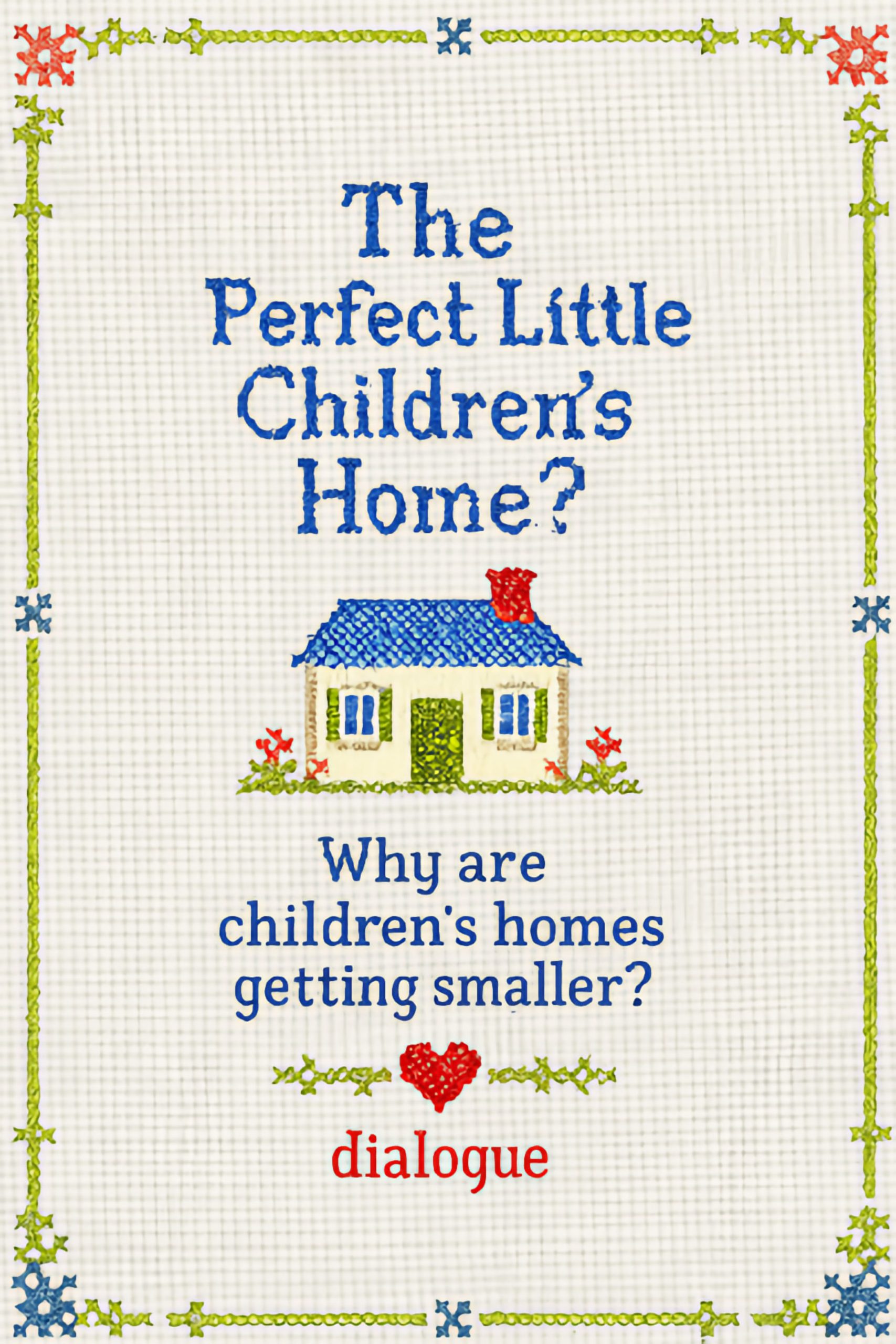
A small reflection on 'The Perfect Little Children’s Home?'
I was very pleased to contribute a chapter to The Perfect Little Children’s Home?, a forthcoming book from Dialogue, which will be launched at the Children’s Commissioners’ Conference in June 2026.
The book brings together a range of thoughtful voices from across residential childcare, commissioning, leadership, research and specialist practice. Its purpose, as I understand it, is not to offer a single or simple answer to the question of children’s homes becoming smaller, but to invite a more careful conversation about what children’s homes are for, what children need from them, and how the sector might think more clearly about scale, safety, relationship and belonging.
John’s vision was both simple and timely: to bring together a range of voices and create space for a more careful conversation about children’s homes. I was grateful to be invited to contribute and found it especially rewarding to be involved in some of the early shaping of the book’s direction and proofing. The work of my co-authors gives the book its breadth and depth, and I am looking forward to seeing those different contributions gathered in one place.
My own chapter considers the history of children’s homes, chiefly in England: their legacy, reform and continuing purpose. It begins, quite personally, with family memory. In writing it, I found myself returning to my own ancestry: to movement, hardship, precarious shelter, child labour and the disciplined expectations of other people’s systems. That connection mattered to me. It reminded me that history is not simply something behind us. Some assumptions about poverty, childhood, family, difference and state intervention still echo, sometimes faintly and sometimes very loudly, in the present.
For that reason, the chapter is not only about the past. It is about how the past continues to ask questions of the present. Children’s homes have changed profoundly, and rightly so. They are smaller, more regulated, more specialist and more clearly framed around children’s rights, welfare and voice. But the ethical question remains familiar: how do we ensure that children who cannot live safely with their families are not merely placed, but properly seen, known and cared for?
I hope the book contributes something useful to that conversation. It has been a privilege to play a small part in it.
The Perfect Little Children’s Home? can be ordered from Dialogue:
https://dialogueltd.co.uk/perfect

Enduring Relationships: a short summary
The Department for Education’s policy paper, Enduring Relationships, was published on 6th June 2026 and sets out the ambition that children in care and care-experienced young people should grow up with trusted, lasting relationships that give them safety, belonging and confidence into adulthood.
The paper recognises that care protects the relationships that matter to a child, and helps new ones to grow, but also finds disruption through distance, instability, poor matching, repeated moves and a focus on immediate risk rather than lifelong belonging.
Enduring relationships are described in terms of consistent relationships that offer emotional security, warmth, responsiveness and shared experience. They are not defined by professionals alone. They are defined by the child, as the expert of their own experience. They may include parents, brothers and sisters, wider family, friends, neighbours, teachers, youth workers, former carers or other adults who know and care about them.
The policy links this approach to the wider children’s social care reform, including family help, family group decision-making, kinship care, Staying Close, sufficiency of homes and stronger corporate parenting responsibilities. It also asks the sector to act now, not wait for further guidance, by placing relationships at the centre of assessment, care planning, matching, reunification, leaving care and inspection.
For residential childcare, the implications are significant. The paper is clear that, while family-based care should be prioritised where possible, there will remain a need for high-quality residential care that is purposeful, specialist and therapeutic. It also points towards a smaller, more focused residential sector, with stronger expectations around workforce development, practice models, leadership and training. This may influence how children’s homes are commissioned, where they are located, how they evidence impact, and how they demonstrate that care is helping children remain connected to the people and places that matter to them.
This is a policy issue but is also a practice question. Children’s homes will need to show that relationships are actively understood, protected and strengthened. Matching, placement planning, family time, sibling relationships, school continuity, community links, advocacy, key-work sessions, staff stability and transition planning all become part of the same relational task.
A home should not be judged only by whether it is safe and compliant, but by whether children experience it as a place where they are known, remembered and helped to belong.
The April 2026 SCCIF already places children’s experiences and progress at the centre of inspection and requires inspectors to evaluate the quality of relationships between children, carers, professionals and parents; how well staff promote belonging and stability; how well children’s views are understood; and whether contact with family, friends, previous carers and other important people is safe, meaningful and unnecessarily unrestricted.
Enduring Relationships does not therefore introduce a wholly new inspection expectation, but it sharpens the existing one: children’s homes will increasingly need to evidence that relational practice is not incidental but deliberate, assessed, safe and impactful. In inspection terms, this means showing how the home helps children remain connected to people and places that matter to them, how decisions about distance, matching, family time, siblings, school continuity and transitions protect rather than fracture belonging, and how leaders know whether these relationships are improving children’s safety, identity, stability and longer-term outcomes.
The paper also sharpens the challenge around out-of-area placements. Children’s homes are often asked to care for children at points of crisis, but distance can disrupt those relationships that may help a child recover. This does not mean such placements are never right, but I think it does mean that decisions (and a child’s understanding) about distance, contact and community connection should be evidenced and regularly reviewed by the registered manager.
The implication for practice is perhaps simple, but also profound: every decision should first consider what impact it may have to a child’s relationships. Does it protect them, repair them, strengthen them, or unnecessarily break them? Can we evidence this during inspection? For care-experienced children, enduring relationships are not an additional benefit. They are the thread through which identity, safety, love and hope are held.
https://www.gov.uk/government/publications/enduring-relationships-for-care-experienced-children/enduring-relationships
Policy developments since 2013: enduring relationships, advocacy and the continuing struggle to hear children
Since The child’s right? The provision of independent advocacy within the context of children’s rights was first written in 2013, the language of children’s rights, participation and advocacy has continued to move into the centre of policy discourse. Yet this has not resolved the central tension identified in the original paper: that children may possess a recognised right to be heard, but still depend upon adult systems, adult permissions and adult thresholds before that right becomes practical, timely and meaningful. The subsequent policy period has therefore been one of both development and repetition. The child’s voice has been more frequently named, and in many respects more seriously regarded, but it still too often must travel through systems that remain complex, fragmented and unevenly resourced.
There have, nevertheless, been important positive developments. Recent government policy has placed renewed emphasis on the importance of relationships for children who are care experienced. In Enduring Relationships, the Department for Education argues that children in care should be helped to sustain the people and connections that matter to them, including family members, siblings, carers, friends and wider trusted adults (2026). This is a significant shift in emphasis. It recognises that care is not only a placement, a plan or a statutory status, but a lived experience made tolerable, and sometimes transformative, through continuity, trust and belonging. Within this framework, advocacy is no longer best understood only as a complaints mechanism or procedural safeguard. It is also a means by which children can explain which relationships matter to them and why, particularly when professionals are making decisions that may alter the shape of their lives.
This policy direction strengthens, rather than softens, the argument for independent advocacy. If a care system is to take enduring relationships seriously, it must also take seriously the child’s account of those relationships. The significance of a brother, former foster carer, residential worker, grandparent, teacher, friend, neighbour or community connection may not be legible in a care plan unless the child is helped to describe it. Equally, the absence of advocacy may mean that relationships are severed not because they are unsafe or unimportant, but because no-one has supported the child to explain their meaning. Advocacy therefore becomes a relational safeguard. It helps protect the child from the administrative tidiness of adult decision-making, where permanence, placement sufficiency, risk management and resource pressures may otherwise override the quieter but deeply consequential claims of attachment, memory and belonging.
The work of the Children’s Commissioner for England also suggests that advocacy has become more visible within national scrutiny. The 2019 report Advocacy for Children focused on independent professional advocacy, to which children may be entitled by law or statutory guidance, and sought to examine the nature and consistency of provision across England (Children’s Commissioner for England). The later report, The state of children and young people’s advocacy services in England, makes an even stronger case for reform. It welcomes the movement towards proactive and opt-out advocacy but finds that the present system remains some distance from this ambition: many children are not referred, referrals do not always result in direct support, and there are continuing questions about independence, training, quality and consistency (Children’s Commissioner for England, 2023). These findings echo the concerns identified by Brady (2011) and discussed earlier in this paper: that advocacy provision can become a postcode lottery, shaped less by children’s rights than by local commissioning arrangements, professional awareness and organisational culture.
There are examples of more proactive practice. The Children’s Commissioner’s Help at Hand service has developed its work with children in care, care leavers and children living away from home, including children affected by serious concerns about the quality of their accommodation or care (Children’s Commissioner for England, 2023a). This is important because it reflects a more urgent and protective understanding of advocacy. It recognises that children may need independent help not only when they complain, but when adults are worried about the places in which they live, when placements are unstable, when moves are being considered, or when children’s own accounts of safety and belonging risk being lost within professional processes.
The question of independence remains especially important. An advocate must not only be independent in contractual or structural terms; they must be experienced by the child as independent. This distinction matters. Children who are looked after, subject to child protection processes, living in residential care, deprived of liberty, seeking asylum, disabled, or approaching adulthood through leaving care services may already be surrounded by adults who hold statutory duties, professional opinions and organisational loyalties. Some of those adults may be kind, skilled and committed, but their roles are rarely neutral. The distinctive value of advocacy lies in its capacity to stand beside the child without becoming another arm of the system. Where advocacy is commissioned by the same bodies whose decisions may need to be challenged, the appearance and reality of independence require careful protection (Children’s Commissioner for England, 2023).
The Children’s Commissioner’s more recent briefing on child victims’ access to advocacy also extends the argument beyond children who are formally looked after or making complaints about children’s social care. It identifies child victims of serious crime as a group whose need for independent advice, guidance and support is not always recognised, despite their exposure to violence, abuse, exploitation and complex justice processes (Children’s Commissioner for England, 2024). This is significant because it returns the debate to a wider rights-based foundation. Advocacy should not be understood only as a service for children already located within particular statutory categories. Rather, it is a mechanism by which children can understand their rights, navigate adult systems and be supported to speak where the consequences of silence might otherwise be profound.
There is, then, a clear line of continuity between the concerns I discussed in 2013 and the policy evidence that has followed. The language has changed, and in some respects has improved. There is now a more explicit recognition that children should not have to find advocacy by chance, through persistence, or only after harm has escalated into formal complaint. The emerging direction towards proactive, opt-out advocacy is therefore welcome, particularly if it is embedded at key points in a child’s journey: entry to care, review meetings, placement moves, changes of social worker, family time decisions, residential care concerns, preparation for leaving care, deprivation of liberty applications, and any circumstance in which the child’s relationships, safety or future are being substantially decided by others.
However, the central concern remains unresolved. Rights that depend upon professional discretion are vulnerable rights. A child who does not know that advocacy exists cannot meaningfully request it. A child who fears consequences may not ask for it. A child with communication needs may be wrongly assumed to have little to say. A child who has repeatedly been moved, disbelieved or disappointed may no longer expect adults to listen. For these children, an opt-in model is insufficient because it places the burden of access on the very person least likely to hold power within the system.
The years since 2013 have therefore not left the argument for independent advocacy behind; rather, they have strengthened it. Policy has become more relational, more rights-conscious and more willing to name the importance of children’s voices, but the practical entitlement to timely, independent and trusted advocacy remains uneven, conditional and too dependent on the adult systems it may need to challenge. The positive story is that advocacy is now more visible, more explicitly connected to children’s rights, and more closely linked to safety, relationships and lived experience. The remaining concern is that visibility is not the same as access, and access is not the same as impact.
The case for independent advocacy is therefore stronger now than it was in 2013. Not because children’s rights were less important then, but because subsequent policy and evidence have made clearer the cost of failing to translate those rights into routine practice. Advocacy should be understood as part of the infrastructure of safe and relational care. It is not an adjunct to good practice, nor a procedural courtesy to be offered when time allows. It is one of the ways in which the state can demonstrate that children in its care, or otherwise subject to its decisions, are not merely consulted but heard; not merely protected but respected; not only planned for but engaged with as rights-bearing persons whose accounts of their own lives carry weight.
The enduring question is therefore not whether children should have access to advocacy, but why access remains conditional, inconsistent and too often dependent on adult initiative and permission. If the care system now accepts that relationships endure beyond placements, meetings and episodes of intervention, then it must also accept that children need independent support to name, defend and preserve those relationships. Advocacy is not the whole answer to the failures of child voice, but without it the promise of Article 12 remains precarious, present in law and policy, but still too easily lost in practice.
The childs right: The provision of independent advocacy within the context of childrens rights 2013
References
Brady, L. (2011) Where is my advocate? A scoping report on advocacy services for children and young people in England. London: Office of the Children’s Commissioner.
Children’s Commissioner for England (2019) Advocacy for children. London: Children’s Commissioner for England.
Children’s Commissioner for England (2023) The state of children and young people’s advocacy services in England. London: Children’s Commissioner for England.
Children’s Commissioner for England (2023a) Help at Hand annual report 2022-2023. London: Children’s Commissioner for England.
Children’s Commissioner for England (2024) Child victims’ access to advocacy. London: Children’s Commissioner for England.
Department for Education (2026) Enduring relationships for care experienced children. London: Department for Education.
United Nations Convention on the Rights of the Child (1991) Convention on the Rights of the Child. Geneva: United Nations.

Every Child Achieving and Thriving: what does it mean for children’s homes?
The Department for Education’s white paper, Every Child Achieving and Thriving, is not, at first reading, a children’s homes document. It is an education policy paper, concerned with schools, curriculum, SEND, attendance, enrichment, behaviour, workforce and accountability. However, for those working in residential childcare, it should not be read as something belonging only to schools. Its central message is wider than education: children should be helped to achieve, to belong, and to thrive within a network of adults and services that understand them, support them and hold ambition on their behalf (Department for Education, 2026).
This matters for children living in children’s homes because the Children’s Homes (England) Regulations 2015 already require providers to do more than keep children safe. Safety is fundamental, but it is not the whole task. The quality standards expect children to receive care which promotes their welfare, supports their education, enables enjoyment and achievement, listens to their views, protects them from harm, promotes positive relationships and is led by adults who understand the purpose and impact of the home (Children’s Homes (England) Regulations 2015; Department for Education, 2015).
There is therefore a clear intersection between the white paper and the regulatory framework for children’s homes. Regulation 8, the education standard, requires children to make measurable progress, to be supported to attend and engage in education, and to benefit from learning that is consistent with their needs, abilities and aspirations. The white paper’s emphasis on attendance, belonging, inclusive mainstream education, SEND support, enrichment and stronger partnerships between schools, local authorities, health and wider services should therefore be directly relevant to residential care practice (Department for Education, 2026).
The policy paper also speaks to regulation 7, the children’s views, wishes and feelings standard. Its language of engagement, participation, belonging and children becoming active participants in their learning is important. For children in residential care, education cannot simply be a placement plan target or a line in a daily record. It needs to be experienced by the child as meaningful, possible and connected to their identity, interests and future. Staff in children’s homes are often the adults who make that bridge: noticing when school is becoming unsafe or unbearable, advocating when a child’s needs are misunderstood, and helping the child to recover confidence after exclusion, absence or repeated educational disruption.
The white paper’s emphasis on SEND is particularly significant. Many children in residential care have overlapping experiences of trauma, disability, unmet learning needs, interrupted education and emotional distress. A stronger inclusive education system, if realised in practice, may reduce the extent to which children are moved out of local learning communities, placed in unsuitable provision, or left waiting for specialist support. However, this will only benefit children in homes if residential staff are treated as active partners in education planning, not peripheral carers who are informed after decisions have already been made.
There is also a safeguarding dimension. The corrected version of the white paper refers to education as a strategic partner in multi-agency safeguarding arrangements and to the inclusion of education in new multi-agency child protection teams (Department for Education, 2026). This aligns with regulation 12, the protection of children standard. Children’s homes should expect schools to be part of the safeguarding network around the child, but homes must also ensure that information is shared carefully, promptly and with professional curiosity. Attendance, exclusion, peer relationships, online risks, changes in behaviour and withdrawal from learning may all be safeguarding information, not merely education information.
For the residential sector, the practical implications are clear. Homes will need to evidence how they promote attendance, respond to barriers to learning, advocate for SEND support, support enrichment, and help children experience school as a place where they can belong. Regulation 14, the care planning standard, is also relevant: the child’s day-to-day care, education, health and relationships should not sit in separate professional compartments. A child’s Personal Education Plan, EHCP, risk assessments, placement plan and key-work should tell one coherent story about what the child needs, what adults are doing, and whether this is making a difference.
The white paper is strongest where it recognises that schools cannot do this alone. Its call for services to wrap around children and families echoes what good residential childcare has long understood: children do not thrive because one professional writes a good plan. They thrive when adults notice, remember, persist, communicate and act together. In that sense, the paper’s ambition is welcome. It gives renewed policy weight to the idea that attainment and wellbeing are not competing priorities but connected parts of the same childhood.
There are, however, questions for implementation. Children living in children’s homes are often those for whom systems have already failed to join up. They may have moved home, school and local authority. They may carry a history of exclusion, drift or professional delay. The residential sector will need to be alert to whether the white paper’s ambitions reach these children in practice, or whether they remain framed around the more settled child with a consistent school, family and community.
For children’s homes, the challenge is therefore both regulatory and moral. The regulations already require homes to be ambitious for children. Every Child Achieving and Thriving strengthens the policy context for that ambition. It invites the residential sector to look again at education not as a separate service, but as a central part of care: a route to confidence, belonging, opportunity and adulthood. The test will not be whether the language is persuasive but whether children living in residential care feel its benefit in their daily lives.
References
Children’s Homes (England) Regulations 2015, SI 2015/541. London: The Stationery Office.
Department for Education (2015) Guide to the Children’s Homes Regulations including the quality standards. London: Department for Education.
Department for Education (2026) Every Child Achieving and Thriving. CP 1508-I. London: Department for Education.